How I Tamed My Stress in Just 10 Minutes a Day with Yoga & TCM Wisdom
Stress feels like a constant buzz in the background of modern life—until I found a quieter way. Blending simple yoga meditation with traditional Chinese medicine (TCM) principles, I discovered a natural reset button. No drastic changes, just small, consistent moments that actually work. If you’re overwhelmed and short on time, this isn’t about adding more to your day—it’s about using what you already have. Let me show you how it changed my rhythm.
The Hidden Cost of Chronic Stress
Stress is more than just feeling overwhelmed or mentally stretched thin—it’s a full-body experience. For many women in their 30s to 50s, stress manifests as tight shoulders, headaches, trouble sleeping, or a persistent sense of fatigue that doesn’t lift, even after a full night’s rest. It shows up in the way digestion slows, skin breaks out, or minor illnesses seem to linger longer than they used to. What many don’t realize is that chronic stress isn’t just an emotional burden; it’s a physiological disruptor that affects every system in the body.
From a Western medical perspective, prolonged stress keeps the body in a constant state of “fight or flight.” The sympathetic nervous system stays activated, flooding the body with cortisol and adrenaline. Over time, this imbalance weakens the immune system, raises blood pressure, and impairs cognitive function. Digestion slows or becomes erratic, contributing to bloating, constipation, or acid reflux. Sleep becomes shallow, and mood swings become more frequent. The body, designed for short bursts of stress followed by recovery, is not built to sustain this kind of ongoing alertness.
Traditional Chinese Medicine (TCM) offers a different but complementary lens. In TCM, stress is often seen as a disruption in the smooth flow of Qi—the vital energy that moves through the body along pathways called meridians. When Qi becomes stagnant, particularly in the liver meridian, emotional tension builds. This stagnation can manifest as irritability, mood swings, menstrual discomfort, or even digestive issues. TCM teaches that emotions are natural forms of energy; when expressed and processed, they flow freely. But when suppressed or ignored, they become blockages—like traffic piling up on a highway with no exit.
The triggers of modern life make this stagnation almost inevitable. Constant screen exposure, back-to-back responsibilities, and the pressure to “do it all” leave little room for stillness. Many women in this age group are balancing careers, family needs, aging parents, and personal goals, often putting their own well-being last. Downtime is rare, and when it does come, it’s often filled with more stimulation—scrolling, multitasking, or passive entertainment—rather than true restoration. The result is a body and mind that never fully switch off.
What’s needed, then, are tools that are both effective and accessible. Most people can’t carve out an hour each day for meditation or long yoga sessions. The solution lies in small, intentional practices that fit into the cracks of a busy schedule. The good news is that even brief, consistent interventions can signal the nervous system to relax, reestablish balance, and begin clearing energetic blockages. The key is not duration, but regularity—and knowing exactly what to do in those precious few minutes.
Why Yoga Meditation Works—And Why Timing Matters
Yoga meditation is often misunderstood as a physical practice focused on flexibility or a spiritual ritual requiring hours of silence. In reality, it’s a powerful mind-body reset that works on a physiological level to calm the nervous system and restore equilibrium. When practiced with awareness, even a short session can shift the body from a state of stress to one of safety and restoration. This shift is not just felt emotionally—it’s measurable in the way heart rate slows, breathing deepens, and muscle tension releases.
Scientifically, yoga meditation activates the parasympathetic nervous system, the branch responsible for “rest and digest” functions. This counters the overactivity of the sympathetic system caused by chronic stress. Studies have shown that regular meditation lowers cortisol levels, improves heart rate variability (a marker of resilience), and enhances sleep quality. These changes happen quickly—sometimes within minutes of beginning a practice. The brain begins to interpret the body’s signals: slow breath, relaxed posture, focused attention—as signs that there is no immediate threat.
From a TCM standpoint, yoga meditation supports the smooth flow of Qi, especially in meridians closely tied to emotional regulation. The liver meridian, which runs along the inner legs and is associated with planning, decision-making, and emotional release, is particularly sensitive to stress. When liver Qi becomes stagnant, it can rise upward, causing headaches, irritability, or even high blood pressure. Gentle stretching and mindful movement help release this tension, allowing Qi to descend and settle. Similarly, the heart and pericardium meridians, linked to joy and emotional protection, benefit from practices that quiet the mind and open the chest.
The timing of practice is crucial. A 10-minute session in the morning can set a calm tone for the day, preventing stress from accumulating. A midday pause can interrupt the cycle of mental fatigue and emotional reactivity. Evening practice supports the body’s transition into rest, making it easier to fall asleep and stay asleep. The beauty of a short routine is that it doesn’t require special conditions—no studio, no outfit change, no long commitment. It can be done in pajamas, at a desk, or even in a parked car. The consistency of daily practice, even in small doses, builds resilience over time.
What makes yoga meditation sustainable is its adaptability. Unlike intense workouts that may feel like another obligation, a gentle practice feels like a gift. It doesn’t demand performance or perfection. It asks only for presence. And because it works quickly, the benefits are often felt immediately—a sense of clarity, a loosening in the chest, a quieting of the mental chatter. This immediate feedback loop makes it easier to return to the practice, even on the busiest days.
Bridging East and West: TCM’s View on Emotional Flow
In Traditional Chinese Medicine, emotions are not seen as flaws or weaknesses—they are natural movements of energy. Joy, sadness, anger, fear, and worry each have their place and purpose. The problem arises not from feeling these emotions, but from their imbalance or blockage. When emotions are suppressed, ignored, or expressed excessively, they disrupt the harmonious flow of Qi. Over time, this leads to physical symptoms and emotional distress.
TCM maps specific emotions to organ systems. The liver is associated with anger and frustration. When liver Qi flows smoothly, a person feels assertive and clear in decision-making. But when Qi stagnates—due to stress, lack of movement, or emotional suppression—it can lead to irritability, mood swings, and even physical tension in the neck and shoulders. The heart governs joy and mental clarity. When heart Qi is strong, a person feels connected and at peace. When it’s disturbed, anxiety, restlessness, or insomnia may arise.
The spleen, often linked to digestion and thought in TCM, is connected to overthinking and worry. When spleen Qi is weakened—by poor diet, excessive mental work, or chronic stress—digestive issues, fatigue, and mental fog can follow. The lungs relate to grief, and the kidneys to fear. Each organ-emotion pair reflects a deeper truth: the mind and body are not separate systems but interconnected expressions of the same vital energy.
Think of emotional energy like a river. When it flows freely, it nourishes the landscape. But when a dam forms—due to unresolved anger, unexpressed grief, or constant worry—the water backs up, floods the banks, or dries up downstream. TCM doesn’t seek to eliminate emotions but to help them move. Practices like gentle yoga, breathwork, and mindfulness act like opening sluice gates, allowing the river to flow again without force or resistance.
This perspective shifts the goal from “managing stress” to “supporting flow.” Instead of fighting against tension, the focus becomes creating conditions for release. A simple seated twist, for example, isn’t just a stretch—it’s a way to wring out stagnant energy in the torso. Deep breathing isn’t just relaxation—it’s a signal to the body that it’s safe to let go. These small actions, rooted in ancient wisdom, become daily acts of emotional hygiene.
My Go-To 10-Minute Routine (Simple Enough to Start Today)
The routine I’ve used for years takes exactly 10 minutes and requires no special equipment, space, or experience. It’s designed to be gentle, grounding, and effective—something you can do in work clothes, on a mat, or even in a chair. I’ve practiced it in hotel rooms, during school pickups, and before bed, and it always brings a sense of centeredness.
The first two minutes are dedicated to deep belly breathing. I sit comfortably, hands resting on my lower abdomen, and inhale slowly through the nose, feeling the belly rise. I exhale fully through the mouth, feeling the belly fall. This simple act engages the diaphragm, which is directly connected to the flow of Qi in the body. In TCM, the diaphragm is seen as a gatekeeper between upper and lower energy centers. When it’s tight, Qi gets stuck. When it moves freely, energy can circulate.
The next four minutes involve gentle seated movements. I begin with seated spinal twists—first to the right, then to the left—keeping the motion slow and mindful. Each twist helps release tension in the liver and gallbladder meridians, which run along the sides of the body. Then, I move into a seated forward fold, hinging at the hips and letting my hands rest on my legs or the floor. This posture calms the nervous system and gently stretches the back, where many people store stress.
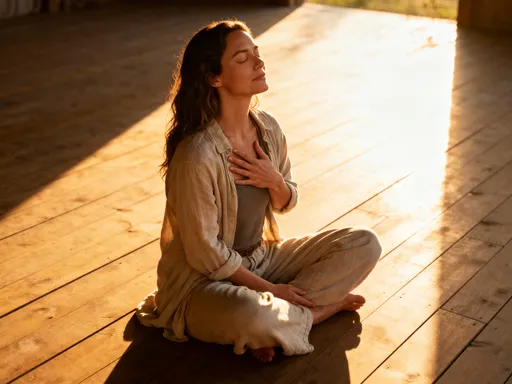
The final four minutes are spent in quiet sitting. I close my eyes, place one hand on my heart, and simply observe my breath. I don’t try to change anything—just notice the rhythm, the temperature, the pauses between inhales and exhales. This is where the integration happens. The body begins to reset. The mind, usually racing from one task to the next, finds a moment of stillness. I often feel a warmth under my hand, a subtle sense of connection to my own life force.
I’ve found that doing this routine first thing in the morning helps me start the day with clarity. If I do it during lunch, it breaks the cycle of mental fatigue. Before bed, it signals to my body that it’s time to wind down. The key is consistency, not perfection. Some days, my mind is louder than others. Some days, I’m tired or distracted. But showing up is what matters. Over time, the practice becomes less about fixing something and more about honoring myself.
Breath as Medicine: The Forgotten Tool
Of all the tools available, breath is the most accessible—and the most overlooked. Most people breathe shallowly, using only the upper chest, especially when stressed. This type of breathing signals the brain that danger is present, keeping the body in a low-grade state of alert. In contrast, deep diaphragmatic breathing sends a clear message: we are safe. The nervous system responds by slowing the heart rate, lowering blood pressure, and reducing muscle tension.
One of the most effective techniques I’ve used is 4-6-8 breathing. I inhale through the nose for a count of four, hold the breath for six, and exhale slowly through the mouth for eight. This extended exhalation is key—it activates the vagus nerve, which plays a central role in calming the body. In TCM, this practice aligns with the principle of An Shen, or “settling the spirit.” It’s not about suppressing thoughts but creating space around them.
Within days of practicing this breathwork regularly, I noticed a shift. I was less reactive in stressful moments—less likely to snap at my kids or feel overwhelmed by a full inbox. It was as if I’d installed a pause button between stimulus and response. I could feel the tension rising, but instead of reacting, I’d take a few slow breaths and choose how to respond. This small change had a ripple effect on my relationships, my focus, and my overall sense of well-being.
The best part is that breathwork is free, invisible, and can be done anywhere. You don’t need a mat, a class, or even privacy. You can do it at your desk, in the car, or while waiting in line. It’s a quiet act of self-care that no one else has to see. And because it works so quickly, it becomes a natural go-to in moments of stress. Over time, it rewires the body’s default response from reactivity to resilience.
Small Shifts, Big Results: What Changed for Me
I didn’t expect dramatic transformations when I started. I just wanted to feel a little more calm, a little more in control. But over time, the changes added up. My sleep improved—I fell asleep faster and woke up feeling more refreshed. The afternoon energy crashes that used to leave me reaching for coffee or sugar became less frequent. My digestion settled, and I noticed fewer tension headaches.
Perhaps the most meaningful change was in my relationships. I was less irritable, more patient, and more present with my family. I wasn’t perfect—there were still tough days—but I recovered faster. I stopped taking small frustrations so personally. I began to see stress not as a sign of failure, but as a signal that I needed to pause and reset.
What surprised me most was that 10 minutes a day was more effective than longer, less frequent sessions. The consistency mattered more than the intensity. It wasn’t about achieving a perfect state of meditation—it was about showing up, day after day, and giving myself a moment of care. This regularity built a kind of inner resilience, like a muscle that gets stronger with use.
My mindset shifted, too. I stopped chasing productivity as the ultimate goal. Instead, I began to value rhythm—moments of activity balanced with moments of rest. I learned to honor my natural energy cycles instead of fighting them. This wasn’t about doing more; it was about being more present in what I was already doing.
Making It Stick: Designing a Habit That Fits Your Life
The biggest obstacle to any wellness practice isn’t lack of time—it’s lack of integration. If a habit doesn’t fit into your existing routine, it won’t last. The key is to anchor the 10-minute practice to something you already do every day. For me, it was brushing my teeth. Now, after I brush, I sit down for my routine. It’s become automatic, like washing my face or making coffee.
Other strategies help, too. I keep my yoga clothes ready in the bedroom, so there’s no excuse about not having the right outfit. I set a gentle reminder on my phone, not as a demand, but as an invitation. I don’t track minutes—I track how I feel. If I notice I’m more focused, less tense, or sleeping better, that’s the real measure of success.
Most importantly, I practice self-compassion. If I miss a day—or even a week—I don’t judge myself. I simply return when I can. The practice isn’t another task to perfect; it’s a form of self-care. It’s not about adding pressure, but about creating space. And each time I return, I reinforce the message that I matter.
This practice has become less of a routine and more of a ritual—a daily promise to myself. It’s not about escaping life’s challenges, but about meeting them with greater clarity and calm. It’s not a cure-all, but a reliable anchor in the storm. And for anyone feeling overwhelmed, I offer this: you don’t need more time. You just need to start where you are, with what you have, and give yourself ten minutes to breathe.
True wellness isn’t about grand gestures—it’s in the quiet moments we reclaim. By combining yoga meditation with TCM’s timeless insights, stress doesn’t have to win. These small, daily acts aren’t just relief—they’re a return to balance, one breath at a time. You don’t need more time. You just need to start where you are.