How I Found Calm and Energy Through Qigong and Simple Eating
For years, I felt constantly drained—no matter how much I slept. Then I discovered qigong and mindful eating through traditional Chinese wellness. It wasn’t instant magic, but slowly, my energy stabilized, my mind quieted, and my digestion improved. This is how I started my journey as a total beginner, blending gentle movement with food awareness in a way that actually fits real life. What began as a quiet experiment became a cornerstone of my well-being, not because it promised miracles, but because it respected the rhythm of my body. In a world that glorifies speed and intensity, this path offered something different: stillness, patience, and a return to balance.
The Burnout That Led Me to Change
Life looked good on the surface. I exercised regularly, ate what I thought was a balanced diet, and made time for family. Yet, I was always tired. Not the kind of tired that a long weekend fixes, but a deep, persistent exhaustion that made even simple decisions feel overwhelming. I’d wake up after eight hours of sleep feeling as if I hadn’t rested at all. My concentration slipped, my mood fluctuated, and I relied on coffee and sugar to push through the afternoons. I wasn’t sick, but I wasn’t truly well either.
The turning point came during a community wellness event at a local recreation center. A small flyer advertised a free introductory class in qigong. I remember walking in with low expectations, thinking it might be another version of yoga or stretching. The instructor, a calm woman in her sixties, spoke softly about energy, breath, and presence. I admit, I was skeptical. Terms like “qi” and “energy flow” sounded abstract, even a little mystical. But something about the way the participants moved—slow, deliberate, grounded—caught my attention.
That first session lasted only 20 minutes. We stood quietly, feet shoulder-width apart, hands gently raised and lowered with the breath. There were no complex poses or rapid movements. Yet, by the end, I felt different. Not energized in a jolting way, but settled. My mind, usually racing with to-do lists, had quieted. For the first time in months, I didn’t feel the urge to check my phone immediately. That small shift planted a seed: maybe health wasn’t just about calories and cardio, but about something deeper—something related to how I moved, breathed, and lived moment to moment.
What Is Qigong? (And Why It’s Not Just “Weird Breathing”)
Qigong (pronounced “chee-gong”) is an ancient practice rooted in traditional Chinese medicine, with a history spanning thousands of years. At its core, it’s about cultivating and balancing qi, the vital life force believed to flow through all living things. While that concept may sound unfamiliar in Western terms, the practice itself is grounded in simple, accessible actions: coordinated breathing, gentle physical movements, and focused awareness. It’s not performance-based, nor is it about flexibility or strength. Instead, it’s a form of moving meditation designed to harmonize the body and mind.
One common misconception is that qigong is just slow breathing or standing still. In reality, it’s a dynamic system that integrates posture, motion, breath control, and mental focus. The movements are repetitive and circular, often mimicking natural elements like flowing water or swaying trees. This repetition isn’t monotonous—it’s intentional. By performing the same motions daily, the nervous system begins to relax, muscle memory develops, and the mind learns to stay present. Over time, this can reduce stress hormones, improve circulation, and enhance overall vitality.
From a physiological standpoint, qigong supports the parasympathetic nervous system, which governs rest and digestion. Unlike high-intensity workouts that activate the “fight-or-flight” response, qigong encourages the body to shift into a state of calm alertness. Research has shown that regular practice can lower blood pressure, improve balance, and reduce symptoms of anxiety and fatigue. It’s particularly beneficial for people in midlife, when energy levels naturally shift and recovery from stress takes longer. The beauty of qigong lies in its accessibility—it requires no special equipment, can be done indoors or outdoors, and is safe for most fitness levels.
Why Diet Matters Just as Much as Movement
As I began to explore qigong, I realized that movement alone wasn’t enough. I was feeling calmer, but my digestion remained unsettled, and my energy still dipped in the afternoons. That’s when I turned to the dietary principles of traditional Chinese medicine (TCM). Unlike Western nutrition, which often focuses on macronutrients and calorie counting, TCM views food as medicine—something that directly influences the body’s internal balance. According to this system, what you eat affects not just your weight or cholesterol, but your mood, energy, and immune function.
One of the most eye-opening insights was the idea that food has energetic qualities. For example, raw and cold foods are considered “yin” and can cool the body, while cooked and warm foods are “yang” and support digestion and warmth. Many people, especially those with low energy, consume too many raw salads, smoothies, and iced drinks, which can weaken the digestive fire over time. In TCM, the spleen and stomach are seen as the center of energy production, and they function best when supported by warm, cooked meals. This doesn’t mean eliminating all cold foods, but rather balancing them with warming ingredients like ginger, cinnamon, and soups.
Another key principle is the balance of the five flavors: sweet, sour, bitter, pungent, and salty. Each flavor corresponds to a different organ system and affects energy in specific ways. For instance, too much sweet (including refined sugars and excessive fruit) can lead to sluggishness and dampness, while too much pungent (like spicy foods) can overstimulate the liver. A balanced diet, according to TCM, includes all five flavors in moderation, tailored to the individual’s constitution and the season. This holistic approach helped me see food not as fuel, but as a form of daily care—one that either supports or disrupts the body’s natural rhythm.
My First Steps: The 3 Simple Qigong Moves I Do Every Morning
Starting qigong felt intimidating at first. There are hundreds of forms, and some look complex. But I learned that consistency matters more than complexity. I began with just three foundational movements, each taking less than five minutes. I practiced them every morning, right after waking, before drinking coffee or checking my phone. This became my anchor—a quiet ritual that set the tone for the day.
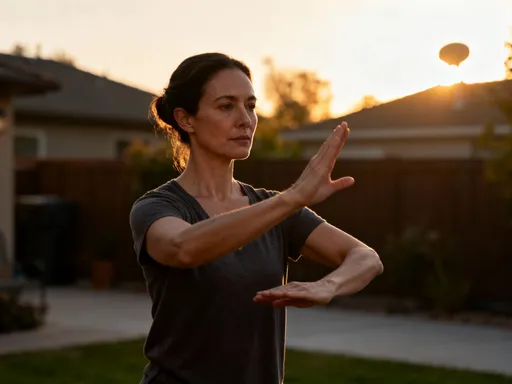
The first move is called Lifting the Sky. I stand with feet shoulder-width apart, knees slightly bent. On the inhale, I slowly raise my hands in front of me, palms up, all the way overhead, as if lifting a heavy but gentle weight. On the exhale, I lower them back down, palms turning to face the earth. This movement stretches the spine, opens the chest, and encourages deep diaphragmatic breathing. It’s said to strengthen the lungs and clear the mind, and I found it especially helpful for relieving morning stiffness and mental fog.
The second is Separating Heaven and Earth. One hand rises above the head, palm facing up, while the other lowers to the side, palm down, as if grounding into the earth. I hold the position briefly, feeling the stretch along the side of the body, then switch sides. This posture promotes balance and alignment, and helps regulate the flow of energy between the upper and lower body. I noticed improvements in my posture and a greater sense of stability, both physically and emotionally.
The third is Wave Hands Like Clouds. I shift my weight gently from one foot to the other while moving my hands in a flowing, circular motion in front of my body, like brushing aside soft clouds. The movement is smooth and continuous, coordinated with slow, even breaths. This form is calming for the nervous system and enhances coordination and focus. It’s become my favorite—especially on days when my mind feels scattered. No special clothing or mat is needed. I do it in socks on a carpeted floor, sometimes with soft music, but often in silence. The key has been regularity, not perfection.
Eating with Intention: The Dietary Shifts That Made a Difference
As I deepened my qigong practice, I began to pay closer attention to what I was eating. I didn’t follow a strict diet or eliminate entire food groups. Instead, I made small, sustainable changes that aligned with TCM principles. The first shift was moving away from cold breakfasts—yogurt, smoothies, and cold cereal—and embracing warm, cooked meals. I started making oatmeal with warm almond milk, a pinch of cinnamon, and freshly grated ginger. The ginger, in particular, made a noticeable difference in how I felt after eating. It warmed my stomach, reduced bloating, and gave me steady energy without the crash.
I also began to notice how different foods affected my mood and energy. For example, I loved iced coffee in the mornings, but it often left me jittery and then drained by 10 a.m. I switched to warm herbal teas—chamomile in the evening, rooibos or ginger tea in the morning. These didn’t provide a caffeine spike, but they supported digestion and kept me hydrated without agitation. Over time, my cravings for sugar decreased, and I found myself naturally drawn to whole foods like steamed vegetables, soups, and lightly cooked grains.
Another helpful change was eating more mindfully. I started taking time to sit down for meals, even if it was just for 15 minutes. I chewed slowly, put my fork down between bites, and stopped eating when I was about 80% full—a concept known in Japan as “hara hachi bu.” This simple practice improved my digestion and prevented the heavy, sluggish feeling that used to follow large meals. I also began to cook more at home, using fresh ingredients and avoiding processed snacks. It wasn’t about being perfect—there were still days when I ate convenience foods—but the overall pattern shifted toward warmth, simplicity, and balance.
Syncing Movement and Meals: The Daily Rhythm That Works for Me
One of the most powerful realizations was how movement and eating could support each other when timed well. I found that doing qigong on an empty stomach in the morning helped me feel more awake and centered. Waiting at least 30 minutes after practice before eating gave my body time to integrate the energy work. Similarly, I avoided vigorous movement right after meals, instead opting for a gentle 10-minute walk to aid digestion. This created a natural rhythm: rise, move, nourish, rest, repeat.
On busy workdays, I protected this routine by waking up just 20 minutes earlier. That small investment paid off in increased focus and reduced stress. I also learned to adapt during social events. If I was at a dinner with friends, I didn’t isolate myself or make a big deal about my habits. I simply chose warm dishes when possible, ate slowly, and skipped dessert if I wasn’t truly hungry. The goal wasn’t rigidity, but awareness. By listening to my body, I could enjoy life without undoing my progress.
I also began to appreciate the value of pauses throughout the day. Instead of eating lunch at my desk while working, I stepped away, even if only for 10 minutes. That small break helped me digest better and return to tasks with greater clarity. I noticed that when I rushed meals or ate while distracted, I felt more tired afterward, regardless of what I ate. Creating space around eating and movement became a form of self-respect—a way of saying, “I am worth the time it takes to care for myself.”
What Changed After 8 Weeks—and What Didn’t
After two months of consistent practice, the changes were subtle but significant. I no longer experienced the mid-afternoon energy crash that used to make me reach for candy or another cup of coffee. My sleep improved—I fell asleep more easily and woke up feeling refreshed. My digestion became more regular, and I had fewer episodes of bloating or discomfort. Most importantly, I felt calmer. The constant background noise of anxiety had quieted, and I responded to daily stressors with more patience and clarity.
That said, there were no dramatic transformations. I didn’t lose 20 pounds or cure a chronic condition. Qigong and mindful eating didn’t erase life’s challenges, but they gave me more resilience to face them. I had more energy to spend time with my family, more focus to manage my responsibilities, and a greater sense of inner peace. The shifts weren’t flashy, but they were real—built not on intensity, but on consistency.
What surprised me most was how these practices began to influence other areas of my life. I became more patient with myself and others. I noticed nature more—the way trees swayed in the wind, the sound of birds in the morning. I started journaling, not out of obligation, but because I had space to reflect. These weren’t goals I had set, but natural outcomes of slowing down and tuning in. The lesson was clear: small, gentle habits, when practiced daily, can create deep and lasting change.
Conclusion
Qigong and mindful eating aren’t quick fixes—they’re daily acts of self-respect. By tuning into my body’s rhythms and honoring what traditional wisdom has long taught, I’ve built a calmer, more balanced life. You don’t need to be an expert to begin. Start with one movement, one warm meal, one moment of stillness. Stay curious, be patient, and let your body guide you. These practices are not about perfection, but about presence. They remind us that health is not a destination, but a way of moving through each day with care and awareness. Always consult a healthcare provider before making major lifestyle changes—but know that gentle, natural steps can lead to real shifts. The journey begins not with a leap, but with a single, quiet breath.